

Understand step by step what you need to get your website up and running

Kaizen Digital Marketing has put together a guide with 5 basic steps for website development. Check it out!
Lack of time, complexity, and financial limitations are no longer excuses for your company not to have a web address. Technology and internet accessibility have become so widespread that it has become a habit for the overwhelming majority of people to search for everything on their computer or smartphone screens. Or would you buy a TV without first Googling to compare prices and choose the model? Certainly not!
However, it is clear that even understanding the need, it is not uncommon for people to hesitate to take the first step to get their own website online. The truth is that more than just having a website, it needs to be of quality, and that is not an easy task. However, the increasing number of specialized professionals and the flexibility of services have made this mission possible and much simpler than you might imagine.
Whether you are a brave person who will venture to develop your own website at your own risk or a cautious one who prefers the security of a professional, it is important to understand the main steps in the website building process.
Step 1 – Hosting
Web hosting is like renting space for your website, including pages, images, documents, and all the resources needed to display it.
There are several types of hosting, and while you can opt for a free server, cutting costs on hosting can end up being expensive, as this type of host may have several disadvantages, such as:
-
Lack of storage space;
-
Display of third-party ads;
-
Bandwidth limits that may restrict traffic, potentially deactivating the site if it exceeds the monthly access limit.
-
Content limitations;
If you choose to pay for a hosting service, don’t be alarmed. Most providers charge monthly or even annual fees that are quite affordable.
Step 2 – Domain Registration

The domain name or URL is nothing more than the address of your website, that is: what the user will type in the browser to access your site.
Domain names also have a small annual cost and can be registered on various online sites. In many cases, it is even possible to acquire the "complete package" by registering the domain with the same provider that offers the hosting service.
Step 3 – Planning
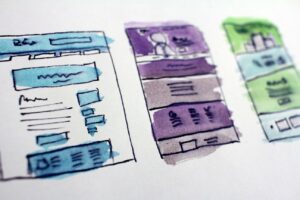
Once the bureaucratic steps are completed, it’s time to outline your website, and for that, it’s important to define some basic questions:
The type of website you need
News or informational, for a company or service, non-profit or monetized, e-commerce, etc. Each of these types has its own characteristics, so the layout and functionalities should be thought out in a personalized way.
Navigation Design
Usability is essential. Therefore, plan the pages and develop a navigation structure that aligns with the architecture of the information your site will contain.
Content

In the land of www, content is king, and you need to value it as it deserves. The relevance and attraction power of the content displayed on your site’s pages are essential for its success. So, give your best in everything: texts, images, videos. Outline a strategy and focus on winning over your visitors.
Step 4 – Building the Site
We’ve reached the most complex part. For those with experience in design and programming, this step can be approached with ease, but if you have never worked with this, it is practically impossible to get through it without the help of one, two, or more professionals.
To build a website, you need at least to have knowledge of web design, master HTML and CSS languages, and understand page editors if you plan to create a content management panel.
Step 5 – Testing
Before putting your site online, it needs to be tested, but not superficially. Go through all the pages, review the content, click on all the buttons, and check the execution of all resources. User experience is everything. Don’t forget that!
Step 5 – Publishing
This is the time to publish the pages you created in the previous step on the hosting provider configured in the first step. This can be done using the tools that come with the hosting service or through FTP (File Transfer Protocol) software.
As you can see, this step is also for professionals.
Done! Your site will be online, but it’s not over yet. After publishing, it’s necessary to optimize it and carry out continuous maintenance work. This way, you will have an effective site for your business and not just another lost address on the web.
Do you know how to optimize your site? No? Then check out The Essential Power of SEO now!