A growing part of online shopping originates from a request made to an assistant: "find a coffee maker that accepts reusable capsules, delivered in Porto Alegre and costs up to R$ 40
For years, retail treated physical and digital channels as separate operations, with separate goals and data that never communicated. In 2026, this separation is the main cause of lost sales: customers no longer think in terms of channels; they think about the easiest path to the product. The consumer is already omnichannel, but the operation is not. The behavior is simple to describe: discovering on a mobile phone, comparing, checking availability at the nearest store, sometimes going to the store, sometimes buying online with pickup. Each of these steps can happen on the same day. If your operation requires the customer to choose 'store' or 'online', it creates friction where there should be ease. The four pillars of convergence 1. Unified and visible inventory Without unified inventory, in-store pickup fails. The customer buys, receives confirmation, and then discovers that the item does not exist. In retail, breaking the promise of availability is one of the main causes of lost trust and negative reviews. 2. Unified customer data Who buys in-store and who buys online needs to be the same person in your CRM. With consistent identification, it is possible to recognize history, preference, and customer value at any touchpoint — and not repeat offers for something already purchased. 3. Flexible channel service WhatsApp, email, phone, and chat need to communicate. A customer who starts a conversation on the website and continues in-store should not have to start over. Centralized AI agents with historical data solve much of this and reduce response time. 4. Well-designed pickup operation Realistic and fulfilled promised timeframe. Notification of 'ready for pickup' via message, not just email. Identified counter and delivery process in under five minutes. Opportunity for complementary sales at the time of pickup. The role of the physical store has changed The store has ceased to be just a point of sale and has become a point of experience, pickup, exchange, and discovery. This changes metrics: measuring only sales per square meter ignores the value of the store as a channel for converting demand generated online. Retailers who track sales influenced by the store make much better media and assortment decisions. Costly mistakes Targeting store goals and e-commerce goals without a single customer view. Treating in-store pickup as a favor, not as a primary journey. Leaving the salesperson without digital tools at the counter. Not measuring online-generated demand that converts in-store. Where to start Unify inventory and check accuracy weekly. Implement customer identification at all touchpoints. Create a clear pickup process and train the team. Redefine metrics by customer, not by channel. Conclusion The discussion 'physical versus digital' has already been resolved by the consumer: they use both. The competitive advantage of 2026 lies in those who can operate as one — same inventory, same customer, same conversation — and turn this continuity into a better experience and higher revenue.
Every company talks about being data-driven, but few take the time to organize the one data point that no one can copy: the real behavior of their own customers. By 2026, with increasing restrictions on third-party tracking and AI algorithms deciding media, first-party data has moved from a technical note to an executive priority. What counts as first-party data? These are the information collected directly from your relationship with the customer: Declared data: forms, surveys, preferences, registration data. Behavioral data: website navigation, product usage, purchase history. Transactional data: orders, returns, payment cycle. Relationship data: interactions with customer service, response time, complaints. CRM data: funnel stage, reason for loss, opportunity source. Why this became a competitive advantage: It feeds media automation with quality signals. Advertising platforms learn from what the company sends. Real sales conversion, customer value, and lead qualification teach the algorithm to find the right buyer. Poor signals lead to poor optimization. It allows personalization that competitors cannot achieve. Segmenting by your own behavior — who viewed the same product three times, who reopened the cart, who stayed 40 days stagnant in the funnel — generates relevant messaging and increases conversion without inflating investment. It reduces dependence on platforms. Those who build their own relationship base — email, WhatsApp, customer list — survive changes in algorithms, privacy policies, and media costs. How to structure it in five steps: Map the sources. List all systems that generate customer data: website, CRM, ERP, customer service, e-commerce, app. Define the unique identifier. One customer, one record. Without this, the data becomes a useless fragment. Consolidate into a single layer. You don't need to buy expensive technology at the beginning: a good integration process already solves 80% of the problem. Govern with a clear policy. Consent, purpose, retention, and access control are not bureaucracy — they are what allows you to use the data without legal and reputational risk. Activate in cycles. Each collected data point needs a destination: campaign, automation, recommendation, or analysis. Stagnant data is a cost. Common mistakes: Collecting too much and using too little — the company becomes a data graveyard. Too many mandatory fields in forms, lowering the conversion rate. No integration between CRM and media, keeping the optimization cycle blind. Treating LGPD as an obstacle instead of a quality rule for the base. How to measure the return: Track four indicators: base enrichment rate, percentage of opportunities with identified origin, cost per qualified opportunity, and repurchase rate of the active base. These numbers show whether the data is being converted into revenue or just accumulated. Conclusion: Paid media has become more expensive and automated; creative has become easier to copy. The data that describes your customer is the only piece that competitors cannot replicate. Companies that organize this base now build a competitive advantage that deepens every month — and that does not depend on the mood of any algorithm.
Brazilian e-commerce is expected to generate R$260 billion in 2026. Discover the main trends, consumer behaviors, and strategies to leverage this market.
Agentic Commerce is the new model where AI agents shop on behalf of consumers. Learn how to prepare your e-commerce for this future that has already arrived.
Your online store sells, but you don’t know who bought, who almost bought, or who bought once and never returned. A CRM for e-commerce organizes this data and transforms occasional buyers into repeat customers — who are worth 5 to 25 times more than the first purchase. What a CRM does for your
You spend money to attract visitors to your store. Then 97% of them leave without buying. Remarketing for e-commerce is the strategy that recovers those lost sales — impacting the potential customer with the exact product they almost bought, on the right channel, at the right time. Why remarketing is the most profitable channel.
When a customer searches for “men's casual sneakers” and sees a photo, price, and store name before even clicking, the purchase decision starts there. Google Shopping is the most converting ad format for e-commerce — 30% higher CTR than text ads and up to 45% higher conversion rate. How it works
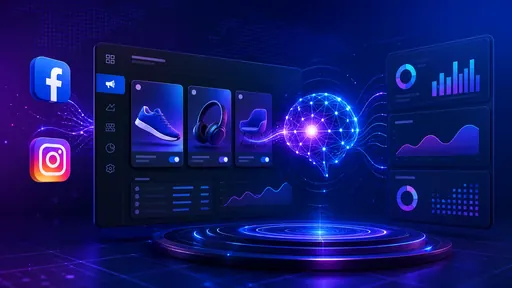
With over 3 billion active users between Facebook and Instagram, Meta Ads is the paid media channel that delivers the most volume for e-commerce — when properly configured. Poorly configured, it is the biggest money drain in digital marketing. This guide shows the right path. The Meta Ads ecosystem for e-commerce in
Brazilian e-commerce generated R$ 262 billion in 2025, and the projection for 2026 is even higher. But growth doesn't just depend on having a good product — it depends on being seen by those who want to buy. Paid traffic management for e-commerce is what separates six-figure stores from those that close.
Most stores operate in the mode of 'let's advertise and see what happens.' A true e-commerce marketing strategy starts with numbers, ends with numbers, and every step in between is measured. This guide shows the planning that separates stores making R$ 50k/month from those that earn R$ 500k+. The 5 pillars of
For every R$ 1 invested in email marketing, the average return is R$ 36 — the highest ROI of all digital marketing channels. But “email marketing” is not a monthly newsletter. It’s automation: sequences that trigger automatically based on customer behavior. For e-commerce, this is the difference between a store that
Your store receives 10,000 visitors per month. With a conversion rate of 1.5% (Brazilian average), that's 150 sales. With a rate of 3%, that's 300 sales — double without spending an extra cent on traffic. Conversion rate optimization for e-commerce (CRO) is the cheapest revenue multiplier available. 15 CRO tactics.
Choosing the wrong platform for your e-commerce is like renting a commercial space in the wrong location — you may have the best product in the world, but customer traffic won't happen. Creating e-commerce websites in 2026 requires more than a pretty template: it demands speed, integration with sales channels, and
Google Ads is the channel that delivers the most purchase-intent sales for e-commerce. However, there is a chasm of incorrect settings between launching a campaign and achieving positive ROAS. This guide shows the campaign structure that high-performing stores use in 2026. The 4 essential Google Ads campaigns for e-commerce.
Meta Ads (Facebook and Instagram Ads) is the most powerful acquisition channel for e-commerce in 2026. With over 3 billion active users on Meta platforms and a tracking pixel that has evolved into a predictive AI engine, advertising on Facebook and Instagram has transformed from 'testing creatives' into a science.
Digital marketing for engineering companies does not work the same way as for consumer or e-commerce businesses. Most decisions in this sector involve high values, technical processes, and longer sales cycles. This means that the digital strategy needs to focus less on visit volume and more on credibility, technical authority, and
Creating effective promotional campaigns for e-commerce in 2026 requires more than just offering discounts. The digital consumer is more informed, quickly compares prices, and decides based on trust, experience, and perceived value. Therefore, truly effective campaigns combine data, smart segmentation, and a seamless shopping experience. The goal is not just to generate a sales spike...
ActiveCampaign can be used in e-commerce to track visitor behavior, recover abandoned carts, and automate personalized communications. The tool allows transforming visitors into repeat buyers through relationship automation based on user actions within the online store. Most online stores invest in traffic. The visitor enters, browses, and leaves.
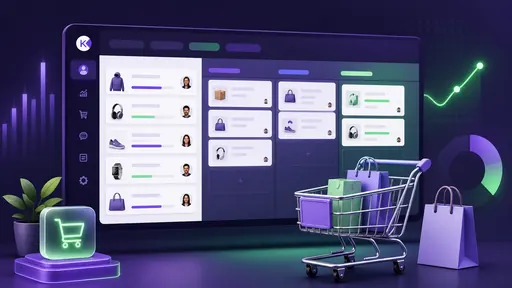
The real scenario of modern e-commerce Kommo for e-commerce: the solution for efficient communication An e-commerce today doesn't just sell with a buy button. It sells through conversation. The customer sees the product on Instagram, asks on WhatsApp about delivery time, wants to know if they can exchange it, asks about size, payment conditions, shipping, delivery. The decision doesn't happen just at checkout; it happens in the conversation.
Discover the e-commerce strategies that will make a difference in 2026. Learn how an e-commerce agency can transform your results by providing essential insights and practices for success. E-commerce Strategies to Boost Results In 2026, the e-commerce landscape is more dynamic than ever. With the advancement of technologies and changing consumer behaviors,
Discover the digital marketing trends for 2026 and get ready to lead in the industry with technological innovations and effective content strategies. Digital Marketing Trends for 2026 Digital marketing in 2026 is constantly evolving, bringing new opportunities and challenges for marketing managers who want to stand out in the market. With the advancement of technologies...
Increasing sales for an online store depends on many factors, but one of the most impactful is SEO for e-commerce. After all, applying search engine optimization techniques allows you to increase your store's visibility and makes it easier for the right consumers to find it. In this article, we will explore the main strategies.