
SEO
AEO: Optimization for Answer Engines Beyond Google
GEO, AEO, LLMO — different names for the same competition: appearing in the answer, not in the list. See the method that works in practice.
· 2 min
Read
Rocket AI Expert
We want to teach you integrated marketing with AI — at a superior level. Expand your knowledge and reach far beyond the obvious.
Quick search in the archive
GEO, AEO, LLMO — different names for the same competition: appearing in the answer, not in the list. See the method that works in practice.

Asking out loud has become routine: in the car, in the kitchen, at work. And with AI assistants increasingly integrated into daily life, queries have shifted from typed keywords to conversation. Content producers need to understand the practical implications of this change. How voice queries differ: They are longer and more natural. "What is the best marketing agency for industry in Porto Alegre" instead of "marketing agency porto alegre." They often have local intent. Most voice questions involve "near me," "open now," or "where is." They require a single answer. The assistant does not show ten results — it chooses one. Being the chosen answer is worth more than being well-positioned. It relies on structured data. Hours, address, service, and reviews need to be machine-readable. Five adjustments that increase your chances of being the answer: 1. Write as you speak. Include the full question in the text, in a question-and-answer format. "How much does an institutional website project cost?" as H2, followed by a direct answer in two or three sentences. This serves both the assistant and the reader who arrived there by voice. 2. Mark frequent questions with schema. Use FAQPage markup for your client's actual questions, with short answers. It is one of the easiest formats for response engines to read and reuse. 3. Reinforce local signals. Complete contact page, updated hours of operation, address in text — not in image —, map, and clickable phone number. An outdated business profile undermines the chance of appearing in local voice queries. 4. Care for speed and clarity. Spoken answers arrive in seconds. If the page is slow, the assistant looks elsewhere. Objective, direct text, without a long introduction before the main point. 5. Work on reviews. Assistants tend to prioritize businesses with consistent reputations. Systematically asking for reviews — not occasionally — is one of the local marketing actions with the best return. Example of page structure: Element Objective H1 with service and city Clarity of entity and location Direct answer paragraph Citable excerpt in voice FAQ block Matching the spoken question Contact information in text Machine-readable Proof of social and reviews Trust and prioritization Common mistakes: Hiding contact information in images or scripts. Writing creative titles that do not describe the service. Ignoring regional variations in product or service names. Not updating hours and holidays. Conclusion: Voice search does not require exotic techniques; it requires clarity. Those who write directly, structure readable data, and maintain a consistent local presence appear in spoken answers. And, since voice offers a single answer, each adjustment here has a disproportionate effect on the volume of contacts received.
Those managing Google Ads have felt the ground shift in recent months. The platform has pushed automation across all formats, reduced the space for fine-tuning, and has begun to require advertisers to focus on what they have historically neglected: quality first-party data. Automation is no longer an option. Campaigns that combine smart bidding, dynamically generated creatives, and broad audiences dominate the platform's recommendations. Manual keyword bidding has lost ground. The practical consequence is that traffic managers have transitioned from button operators to signal curators. This means deciding which conversions matter, what returns to the platform as learning, and how measurement is structured. Getting the attribution rule wrong today is more costly than getting the bid wrong yesterday.

Understand how Google AI Overviews and GEO change SEO, why citation matters more than clicks, and how to structure answers for AI.

Perplexity AI is the AI-based search engine that, instead of returning a list of blue links, delivers a direct answer with sources...

Your site is not only read by people: it is read by AIs that decide whether to recommend it. Learn the SEO practices for AI — from structured data to conversational content.

Google's AI Overviews appeared in 43% of searches in 2026. Understand what this means for your organic traffic and how to get your content cited in AI responses.

Manual campaign optimization is becoming a thing of the past. AI agents adjust bids, creatives, and audiences in real time. See how to make the most of paid traffic with AI in 2026.
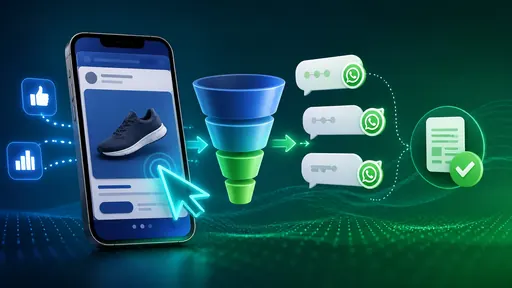
Learn how to structure paid traffic campaigns for WhatsApp that generate qualified conversations and quote requests. A complete guide with strategies for Google Ads, Meta Ads, and Instagram.

Generative search is changing the SEO game. Understand what GEO is, how to optimize content for ChatGPT, Gemini, and Google's SGE.
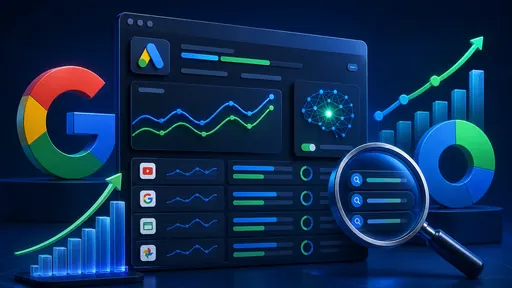
Complete guide to Google Ads in 2026: Performance Max campaigns, AI-driven smart bidding, LTV optimization, and strategies to maximize ROI.
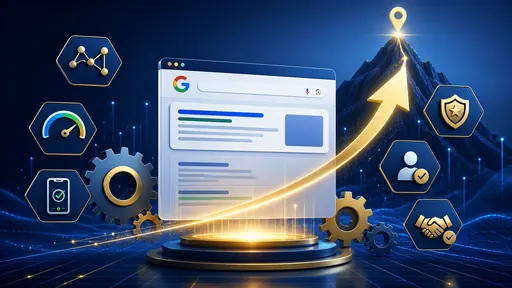
Google updated its algorithms in 2026. Discover the new SEO rules, Core Web Vitals 2.0, E-E-A-T, and how to rank at the top of search results.
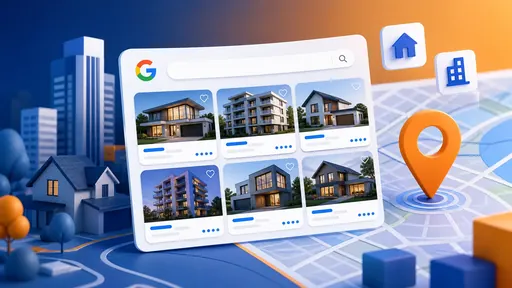
Google now displays properties in search results with photos, prices, and direct contact. Understand Google Real Estate, what changes for realtors, and how to prepare.

With AI prioritizing trustworthy sources, E-E-A-T has become the most important factor in SEO. Learn how to build real digital authority for your business.

Traditional SEO is evolving into GEO (Generative Engine Optimization). Understand how to optimize your content to be cited by AIs like ChatGPT, Gemini, and Google SGE.
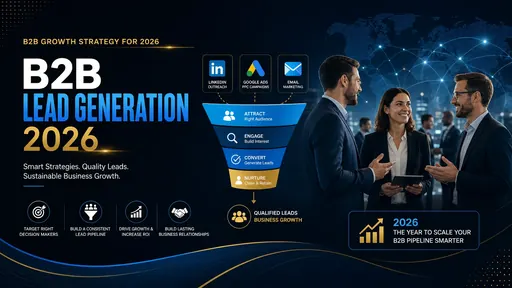
Proven B2B lead generation strategies in 2026: LinkedIn, Google Ads, Meta Ads, content, and AI automation.
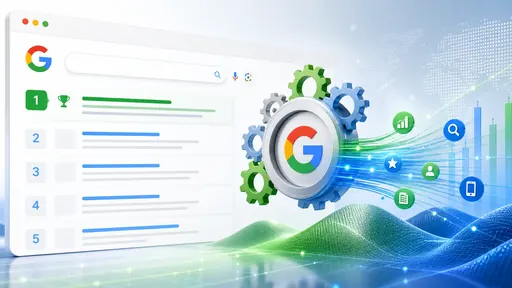
SEO in 2026 is evolving with AI Overviews, EEAT, voice search, and zero-click. A complete guide to the trends that will define ranking.
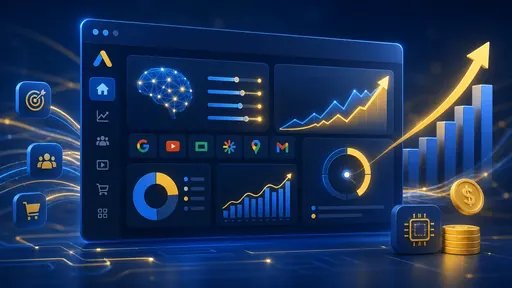
Complete optimization guide for Performance Max in 2026. Strategies for PMax with High Value Mode, Predictive Budget, and much more.
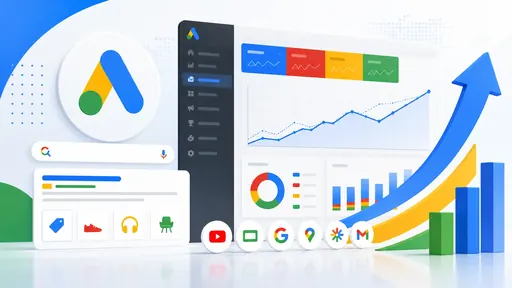
Google Ads 2026 introduced AI Mode, enhanced PMax, Demand Gen, and the end of Call Ads. A complete guide to all the changes and how to adapt your campaigns.
Kaizen Agency is a Premier Google Partner — the highest certification from Google Ads. Professional campaign management, auditing, strategy, and ROI optimization.

We develop responsive landing pages focused on conversion — architecture, copy, design, speed, tracking, and A/B testing integrated into your paid media funnel and CRM.

Kaizen Agency is an RD Station Platinum Partner for 2025. We implement a complete funnel — attraction, conversion, nurturing, and sales — integrated with Google Ads, Meta Ads, and CRM to generate predictable leads.
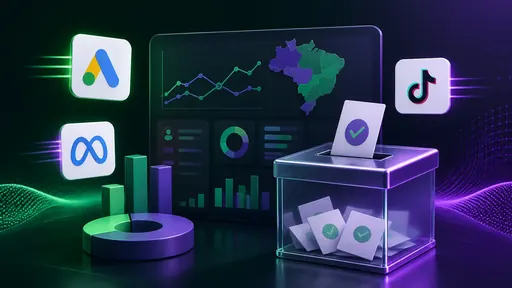
How to invest in paid traffic during the election without waste — targeting, TSE rules, ROI optimization, and strategic channel selection.

Complete SEO guide for political campaigns — keywords, content, local SEO, link building, and indexing for candidate websites in 2026. Appear in searches.
Continuous evolution for maximum performance
Kaizen University is our open education platform, created to train high-performance strategists in sales, marketing, and process automation.
We offer free courses, complete learning paths, and exclusive content for professionals who want to master market best practices.