
There’s a phrase we hear in every campaign: "The people want change". But which people? What change?
A 22-year-old voter in the outskirts of São Paulo doesn’t want the same things as a 58-year-old voter in the interior of Rio Grande do Sul. A micro-entrepreneur doesn’t have the same pains as a civil servant. A practicing evangelical may prioritize different values than a young atheist university student.
Treating everyone with the same message is the most expensive and common mistake in Brazilian political marketing. It’s throwing money away, losing undecided voters, and — worse — saying what no one wants to hear.
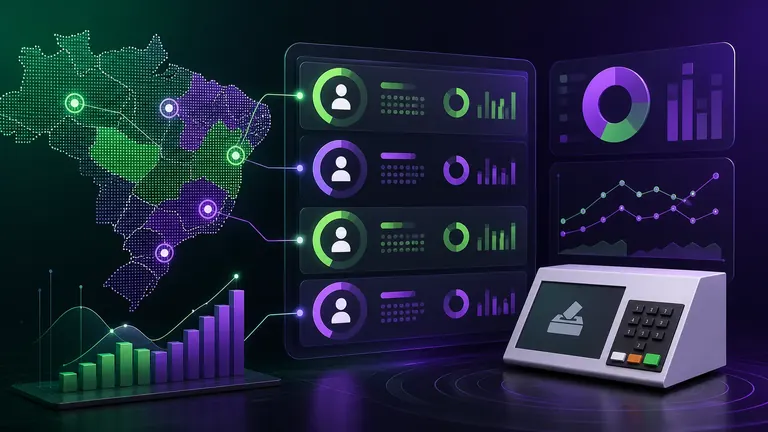
The solution has a name: voter segmentation with data.
It’s not guesswork. It’s not a marketer’s "feeling". It’s not repeating what worked in the last election. It’s using real data — demographic, geographic, behavioral, and psychographic — to understand who the voter is, where they are, what they think, how they consume information, and which message is most likely to convert them.
At Kaizen Agency, we’ve been doing this for companies for over 15 years: accelerating sales with data, CRM, automation, and AI. And the good news is that this same methodology works for political campaigns. In this article, I’ll show you how.
Why Segmenting Voters is the Difference Between Winning and Losing
In the 2022 elections, Daniel Soranz was re-elected mayor of Rio de Janeiro in the first round with a strategy that caught attention: microtargeting by neighborhood. Instead of a generic campaign, the team created specific materials for each region — prioritizing local pains: in one area, the message was about mobility; in another, about health; in another, about security.
It’s no coincidence that data-driven campaigns are winning at all levels. The reason is simple:
Voters are not the same. Generic messages do not convert.
When you segment with data, you can:
- Increase message relevance — the voter feels that you understand their reality.
- Reduce media waste — you stop impacting those who would never vote for you and concentrate the budget on undecided and sympathetic voters.
- Increase conversion rates — from engagement on social media to votes at the polls.
- Personalize communication at scale — with CRM and automation, you treat each segment differently without multiplying the team’s workload.
In other words: segmenting is the difference between shouting in the desert and speaking in the ear of the right voter.
The 4 Types of Data You Need (and Already Exist)
All segmentation starts with data. And here’s some good news: you don’t need to hire an expensive research institute to get started. Many data sources are already available — for free or at low cost. You just need to know where to look and how to organize it.
1. Demographic Data
These are the most basic and easiest to obtain: age, gender, education, income, occupation, marital status, religion, race/color.
Main sources:
- IBGE (Census 2022 and Continuous PNAD): the best demographic portrait of Brazil, available by municipality, neighborhood, and even census sector.
- TSE (voter statistics): data on voters by municipality — age, gender, education, electoral zone. Updated monthly and public.
- DataSUS: health, mortality, and birth data by region — useful for campaigns with public health agendas.
How to use in the campaign:
Cross the TSE database with the IBGE Census and you can already map the demographic profile of the electorate by neighborhood, electoral zone, and city. Practical example: if your campaign focuses on education, you can identify neighborhoods with a higher concentration of young voters (16 to 24 years old) and prioritize street efforts and media in those regions.
2. Geographic Data
Geolocation goes far beyond "which city the voter lives in". Neighborhood, ZIP code, proximity to public facilities, population density, urban vs. rural areas — all of this influences the pains and priorities of the voter.
Main sources:
- Google Trends by region: shows what people are searching for in each state, city, or metropolitan area.
- IBGE Maps: territorial meshes, division by census sectors.
- Meta Ads Audience Insights: allows you to visualize the geographic concentration of interests and behaviors.
- Programmatic media data: real-time geolocation of impacted devices (Kaizen has its own solution for this).
How to use in the campaign:
Create "priority zones" — regions where your message has more adherence. In a campaign for state deputy, for example, you can cross past voting data with socioeconomic indicators and concentrate visits, parades, and geolocated ads in municipalities where the candidate performed well but still has room to grow.
3. Behavioral Data
This is where the game gets more advanced. Behavioral data shows what the voter does — and not just who they are. This includes: media consumption behavior (preferred social network, access time, type of content consumed), search behavior (what they search for on Google and YouTube), political engagement behavior (do they share content? comment? participate in groups? donate?).
Main sources:
- Meta Business Suite and TikTok Analytics: show your audience's behavior on social media.
- Google Search Console: reveals the queries that lead voters to your site — a goldmine for understanding real pains.
- SEMrush and Ahrefs: keywords that the competition is ranking for.
- First-party data (own CRM): interactions recorded with your campaign — registrations, clicks, messages, events, donations.
How to use in the campaign:
Identify patterns. Voters who arrive via Google searching for "health proposals" behave differently from those who arrive via Instagram after seeing a Reel. The former are in rational research mode; the latter are in emotional discovery mode. Each requires a different approach to content and nurturing.
4. Psychographic Data
This is the most powerful — and the hardest to obtain. Psychographic data reveals values, beliefs, attitudes, lifestyle, aspirations, and fears. In politics, this is gold.
Main sources:
- Qualitative and quantitative research: focus groups, surveys, interviews — still irreplaceable for mapping values.
- Social media analysis (social listening): what voters comment on, share, and defend on social media.
- Cross-referencing behavioral data: a person who follows sustainability, personal finance, and yoga profiles has a very different psychographic profile than someone who follows motorsport, firearms, and agriculture.
How to use in the campaign:
This is the level of segmentation that allows you to create narratives. Instead of saying "I will improve security", you say "I know you are afraid to let your child return home alone from school" — and this is only possible when you understand the real values and fears of the voter.
Where to Find the Data: A Practical Map of Sources
I’ve organized the main data sources you can access today — many of them free and public:
| Source | Type of Data | Access | Cost |
|---|---|---|---|
| TSE — Voter Statistics | Demographic, geographic | tse.jus.br | Free |
| IBGE — Census and PNAD | Demographic, geographic, socioeconomic | ibge.gov.br | Free |
| Google Trends | Behavioral, geographic | trends.google.com | Free |
| Meta Ads Audience Insights | Behavioral, demographic | Business Suite | Free (with account) |
| Google Search Console | Behavioral (real searches) | Own site | Free |
| SEMrush / Ahrefs | Behavioral (keywords) | Subscription | $$ |
| DataSUS | Demographic (health) | datasus.saude.gov.br | Free |
| First-party data (CRM) | Behavioral, transactional | Campaign's own platform | Your own |
| Social listening (Brandwatch, Sprout, manual) | Psychographic, behavioral | Subscription or manual | $$ |
| Programmatic media (DSP) | Real-time behavioral | Platform (e.g., DV360) | $$ |
Kaizen's recommendation: start with free sources. Cross TSE + IBGE + Google Trends. Then, move on to paid sources as the budget allows. The important thing is to start with data — even if basic.
How to Build Voter Personas with Real Data
A persona is a semi-fictional representation of your ideal voter — based on real data, not assumptions. A well-segmented campaign works with 3 to 5 personas at most.
Step-by-step to create a voter persona:
1. Collect raw data. Use the sources from the table above. Start with TSE and IBGE for the demographic portrait of your electoral base.
2. Identify patterns. Group the data into clusters. Example: "voters aged 25 to 34, incomplete higher education, residents of the South Zone, who search for 'jobs' and 'public transport' on Google".
3. Interview real voters. Take 5 to 10 people who fit the cluster and interview them. Ask about pains, values, how they consume political information, and what would make them change candidates.
4. Create the persona profile. Give a name, face (representative photo), and fill in:
- Demographic data: age, gender, education, average income, occupation, religion, marital status.
- Main pains: what keeps them awake at night? E.g., "can’t find a spot in daycare for their child".
- Values and beliefs: what is non-negotiable? E.g., "believes that the state should guarantee quality health and education".
- Media behavior: where do they get informed? E.g., "consumes news on Instagram (Reels) and neighborhood WhatsApp groups; doesn’t watch open TV".
- Barriers to voting: what would make this person NOT vote for the candidate? E.g., "perceiving that the candidate is 'more of the same' — a professional politician without real connection to the community".
- Conversion triggers: what would make this person vote? E.g., "seeing that the candidate has concrete proposals for the neighborhood daycare, with deadlines and budget".
Practical example: three personas for a city council campaign
👤 Persona 1 — "Júlia, 29, single mother, North Zone"
- Pains: daycare, neighborhood security, public transport.
- Media: Instagram and WhatsApp. Doesn’t watch TV.
- Trigger: concrete proposals with neighborhood name and deadline.
👤 Persona 2 — "Seu Antônio, 61, retired, Downtown"
- Pains: long lines at the health post, bad sidewalks, feeling of abandonment.
- Media: Facebook, local radio, and neighborhood printed newspaper.
- Trigger: seeing that the candidate "knows the neighborhood" and frequents the area.
👤 Persona 3 — "Lucas, 23, university student, South Zone"
- Pains: unemployment, lack of leisure options, expensive transport.
- Media: TikTok, Twitter/X, YouTube. Zero TV and zero Facebook.
- Trigger: youthful language, clear positioning on diversity and opportunity issues.
With these three personas defined, the campaign stops creating generic content and starts producing specific pieces for each group — with completely different language, tone, channel, and message offer.
Political CRM: the Machine for Segmentation and Personalization
Creating personas is the first step. Operationalizing segmentation is the second. And this is where political CRM comes in.
CRM (Customer Relationship Management) is a system that organizes your contact base, records interactions, and automates communications. In political marketing, it serves to transform anonymous voters into known contacts — and known contacts into nurtured and mobilized voters.
What a political CRM does in practice:
- Centralizes the voter base: all campaign contacts — from website forms, WhatsApp groups, street events, registrations on landing pages, supporter lists — are kept in one place.
- Automatically segments: with tags, lists, and custom fields. E.g., "neighborhood = North Zone", "interest = education", "status = undecided", "entry channel = Instagram".
- Records interaction history: who received which message, who opened, who clicked, who responded, who donated, who confirmed attendance at an event.
- Automates communication cadences: personalized sequences of WhatsApp, email, or SMS by segment. E.g., a sequence of 5 messages for undecided voters from the North Zone focusing on daycare and security.
- Measures what works: open, click, response, conversion rates — by segment, by message, by channel.
At Kaizen Agency, we use KaizenCRM with integrated WhatsApp for commercial and political campaigns. The logic is the same: organize, segment, nurture, and convert — whether selling a product or winning a vote. In both cases, the secret is to treat each lead (or voter) as an individual, not as a number.
📎 *Read the complete guide: [Political CRM: How to Organize and Nurture Your Voter Base with Technology](/artigos/crm-politico-gestao-eleitores)*
Message Personalization: What to Say to Each Segment
With the data organized and the CRM running, we arrive at the most tactical stage: creating different messages for different segments.
The Personalization Matrix by Segment
| Segment | Main Channel | Tone | Key Message | Offer |
|---|---|---|---|---|
| Young people 16-24, university students | TikTok, Instagram | Informal, direct, humorous | "Politics can be different" | Behind-the-scenes content, live sessions |
| Women 30-45, mothers | Instagram, WhatsApp | Empathetic, welcoming, practical | "Real solutions for your family" | Daycare, health, security proposals |
| Men 45+, workers | Facebook, WhatsApp | Serious, proactive, direct | "Work and dignity" | Economic proposals, job creation |
| Seniors 60+ | Facebook, radio, TV | Respectful, clear, no jargon | "Experience and commitment" | Health, retirement, accessibility proposals |
| Evangelicals | WhatsApp, Instagram | Respectful, community language | "Values that unite us" | Family issues, religious freedom |
| Entrepreneurs | LinkedIn, Instagram | Pragmatic, results-oriented | "Less bureaucracy, more opportunity" | Tax simplification proposals |
⚠️ Important: The matrix above is a didactic example. Each campaign should build its own based on the real data of its base, not on stereotypes. Personalization works when it is based on data — otherwise, it becomes caricature.
The Kaizen Principle of Personalization: "Relevance > Volume"
In sales acceleration, Kaizen applies a simple principle: it’s better to send the right message to 1,000 people than a generic message to 100,000. For campaigns, the logic is the same.
With a functioning CRM, you can, for example:
- Identify undecided voters (people who interacted with your content but did not register as supporters) and send a sequence of messages with social proof, proposals, and testimonials.
- Re-engage cold supporters (registered for more than 30 days who have not interacted recently) with a reactivation message and an invitation to an event.
- Mobilize engaged supporters (those who opened, clicked, and shared) with requests for volunteering, donations, or invitations to be digital campaigners.
All of this, at scale, automated, and measured.
Compliance: LGPD and Electoral Justice Rules
Data is power — and with power comes responsibility. Using voter data in the campaign requires care with two regulatory frameworks: the LGPD (General Data Protection Law) and the electoral legislation of the TSE.
LGPD Applied to Political Campaigns
The LGPD applies to everyone, including candidates and parties. In practice:
- Legal basis: all collection of personal data needs a legal basis. The most applicable to campaigns are: consent (voter fills out a form and agrees), legitimate interest (for contacting already engaged voters), and regular exercise of rights (for party activities, with caveats).
- Transparency: clearly inform what the data will be used for. "Your data will be used for communication of candidate X's campaign and will not be shared with third parties."
- Rights of the data subject: the voter can request access, correction, or deletion of data at any time. Your campaign needs to have a channel for this.
- Security: collected data must be stored securely, with restricted access to authorized personnel. A shared Excel spreadsheet on the campaign committee's WhatsApp is not secure.
TSE Rules
The Superior Electoral Court has specific rules regarding the use of data and digital communication:
- TSE database: you can access voter statistics (aggregated, anonymized data), but cannot access individual voter data (name, address, phone) through the TSE.
- Mass messaging: mass sending via WhatsApp, SMS, and email is allowed, as long as it is to own bases (built with consent) and not through third-party companies that sell "voter lists" — this is illegal and a huge legal risk.
- Boosting and ads: segmentation in Meta Ads and Google Ads is allowed, but with the content restrictions of the platforms (prior authorization, "paid by" disclaimer, no segmentation by race, religion, or sexual orientation on some platforms).
- Deep fakes and AI: the TSE requires clear labeling of content generated or manipulated by AI.
📌 Kaizen's golden rule: build your own base. First-party data — data that voters voluntarily provide to your campaign — is the only safe, legal, and sustainable path. Anything that comes from "ready-made" or "purchased lists" is a legal risk and of very low contact quality.
Conclusion: Data > Guesswork, Always
In 2026, winning campaigns will not be those that spend the most. They will be those that segment the best.
The technology exists. The data is available. The CRM is accessible. The difference between a campaign that converts and one that just makes noise lies in the ability to use these tools intelligently — stopping talking to "everyone" and starting to talk to each voter the way they want to be approached.
At Kaizen Agency, we’ve been doing exactly this for companies for over 15 years: accelerating results with data, CRM, automation, and AI. Now, we are bringing this same methodology to political marketing.
If your campaign wants to stop shooting in the dark and start segmenting accurately, talk to us.
[Talk to a Kaizen specialist →](/contato)
[Discover the Kaizen Leads HUB →](/solucoes/hub-de-leads-kaizen)
FAQ — Voter Segmentation with Data
1. How much does it cost to start segmenting voters with data?
The initial cost can be zero. The data from TSE, IBGE, and Google Trends is free. What you need is time to cross-reference these bases and build the personas. As the campaign progresses, investing in CRM and programmatic media increases the accuracy of segmentation — but you can and should start with what is available for free.
2. Can I buy lists of voters with phone numbers and emails?
No. This is illegal and a serious legal risk. The commercial lists of "voter contacts" circulating in the market have no legal basis (violate the LGPD) and often have outdated data. The correct path is to build your own base: landing pages, forms, registrations at events, voluntary interactions on social media.
3. Is political CRM very complex? Can small campaigns use it?
Yes, they can. There are entry-level CRMs (many free for small bases) that allow you to organize hundreds or thousands of contacts, create segmentation tags, and automate simple communications. KaizenCRM, for example, is designed to scale from local campaigns to major campaigns. The important thing is to start structured, even if with simple tools.
4. How do I know if the segmentation is working?
Measure. Compare the engagement (open rate, click rate, response rate) of segmented communications versus generic ones. Monitor the conversion rate (from sympathizer to supporter, from supporter to volunteer, from undecided to vote). If the metrics are not improving, adjust the personas and messages. Data doesn’t lie — use it to correct the course.
5. What is the difference between demographic and psychographic segmentation in practice?
Demographic tells you who the voter is: male, 35 years old, middle class, high school education. Psychographic tells you why they vote: values security, distrusts professional politicians, gets informed through neighborhood WhatsApp groups. The first helps you find the voter; the second helps you talk to them in a truly persuasive way.
Read also (from the Political Marketing 2026 series)
- [Digital Political Marketing in 2026: The Definitive Guide for Candidates](/artigos/marketing-politico-digital-2026-guia-definitivo) — The complete vision of the 7 pillars of digital political marketing.
- [Political CRM: How to Organize and Nurture Your Voter Base with Technology](/artigos/crm-politico-gestao-eleitores) — Tactical guide to political CRM: from setup to automated nurturing of voters.
- [Artificial Intelligence in Campaigns: From Data Analysis to Automated Service](/artigos/inteligencia-artificial-campanhas-politicas) — How AI enhances the segmentation, personalization, and automation of your campaign.
📊 From the Kaizen editorial team · Rita Lee, Senior SEO Analyst.
Series: Political Marketing for Elections 2026 — Article 3 of 20.
Kaizen Agency · Google Partner Premier · We accelerate businesses and launch rockets 🚀