Discover the main secrets of live marketing!
We know that consumers are becoming increasingly demanding and, therefore, value the relationship with brands that can offer authentic and memorable experiences. In this context, live marketing emerges as a promising strategy to create emotional connections with the audience and generate effective results for companies.

Have you heard of live marketing?
The term is still becoming popular in Brazil, and some people have questions about what it means. But, in fact, live marketing is nothing more than the creation of live and interactive experiences designed to bring consumers closer and thus provide unique sensations. The ultimate goal is to generate engagement with the audience.
This can occur in different ways, whether through events, activations in public places, product demonstrations, giveaways, and free samples, or other tactics, including live streams on social media. Thus, it is a democratic strategy that has proven effective in increasing awareness, retaining customers, and generating sales.
In this text, we will explore in detail the concept of live marketing so you can understand once and for all how it can be applied. Next, discover the main advantages of this methodology, market trends, and examples of campaigns that made headlines worldwide.
By the end of this reading, you will certainly be full of ideas to put into practice in your business!
What is live marketing?
We can say that live marketing is a marketing strategy focused on creating interactive experiences for consumers. Its actions can even occur “live,” promoting products and services or brands as a whole. Thus, the focus is precisely on generating public interest through the experience.
Moreover, it is very important to understand that this marketing technique can engage consumers in a personal and emotional way. In other words, it is a tool that allows for creating a deep and differentiated connection with the brand. Generally, companies let their imagination flow, as the more innovative the action, the greater the chance of generating maximum engagement. Among the tactics used are live events, product demonstrations, activations in public places, interactive experiences, and much more.
Depending on the planning and execution, live marketing has everything to be highly effective, as it allows companies a true connection with their consumers. But be careful: we are talking about a real connection, on a very personal level. Generally, these actions have the power to create memorable experiences that make customers start to associate them positively with the brand.
From promotional marketing to live marketing
By now, you might be wondering if live marketing is the same as promotional marketing. After all, their concepts seem somewhat similar, right? The truth is that live marketing can indeed be considered an evolution of promotional marketing. After all, both are based on the idea of creating unforgettable experiences for consumers. All this with the aim of generating greater involvement with the brand and, consequently, increasing sales.
Recall the concept of promotional marketing
This is a marketing strategy aimed at promoting a product, service, or brand. To this end, promotional actions are used, such as promotions, discounts, free samples, giveaways, contests, or events, with the aim of stimulating the purchase or use of the product or service.

How do these two strategies differ?
While promotional marketing is more focused on distributing samples, giveaways, and granting discounts to encourage sales, live marketing is based on creating immersive experiences, allowing consumers to interact with the brand in a deep and personal way.
It is also important to emphasize that live marketing is aimed at generating content and engagement on social media. After all, its campaigns are designed to encourage consumers to share their experiences on social media. We can say, therefore, that it is an “Instagrammable” campaign.
What are the objectives of a live marketing campaign?
As we have discussed so far, we can say that the objectives of live marketing are primarily based on validating the emotional connection and consumer loyalty to the brand. Of course, audience engagement is one of the main objectives. However, linked to it are other important issues, as detailed below.
Generate engagement: it is a fact that one of the objectives is to propose immersive and interactive experiences to engage customers and thus encourage them to interact with the brand in an even deeper and more personal way.
Increase visibility: due to the actions that are somewhat “Instagrammable,” it is a tool that helps increase brand exposure, as its campaigns are designed to encourage sharing on social media.
Promote products and services: yes, despite all the creative differential, promoting products and services remains a fundamental, basic, and essential objective of live marketing. With these actions, it is expected to attract new customers, increase sales, and retain the audience.
Strengthen the image: in general, live marketing is often used by renowned companies in the market, which means that its objective is not limited to sales. In fact, it is excellent for strengthening the image based on experiences that are aligned with the values and objectives of the brand.

Is live marketing a good strategy for lead generation?
Yes! We have separated this topic from the others due to the importance that live marketing has in lead generation. In fact, it is excellent for this purpose, as it allows brands to interact directly with the desired customer.
How to generate leads with live marketing?
Live marketing actions are special for lead generation; however, some formats stand out among the others. They are:
Events and activations in public places: promoting a live event or conducting an activation in a public space allows the brand to encourage the audience to provide contact information, such as name and email address, in exchange for giveaways or discounts.
Live broadcasts on social media: even in the digital realm, live marketing is effective; an example of this is live streams on social media, which allow reaching a large number of people. These events can focus on the most relevant topics for the target audience. Thus, the company can request that visitors sign up for an email list or follow its profiles to access new content.
In-store experiences: this is an efficient way to generate leads, as this type of action allows people to interact directly with the brand's products. By creating an engaging experience in a physical store, the brand can encourage attendees to provide contact information in exchange for giveaways and free samples.
Success case
Curious about how live marketing can be applied in practice? The good news is that we have numerous successful campaigns around the world to use as examples. Check out some impactful cases below!
Coca-Cola
In 2011, the most famous soda brand created the “Happiness Machine.” The idea was to surprise consumers in public places with an automatic machine that delivered much more than cans of Coca-Cola. In addition to the drink, the machines delivered gifts, flowers, and even concert tickets. The public was often moved by the deliveries.
Red Bull
Known for its bold and innovative actions, the energy drink brand conducted the unforgettable parachute jump by Felix Baumgartner in 2012. At the time, Red Bull sponsored the event, which was broadcast live on the internet to millions of viewers worldwide.
Heineken
Surprise trip… In 2013, Heineken surprised with its “Departure Roulette” campaign. The strategy consisted of asking passengers at an airport to make a “simple” choice at the boarding roulette. They had to choose between boarding their original flight or swapping it for a completely unknown destination. The goal was to reach consumers seeking adventure and new experiences.
Why use live marketing in your next campaign?
As we have seen so far, major global brands use live marketing to reach their desired audience. But did you know that these ideas can be adapted to the reality of your business? After all, it is an efficient strategy for those who want to stand out in the market. And, of course, we are talking about small, medium, and large companies.
With the right strategy, it is possible to connect directly with the desired audience, generate high-quality leads, and create valuable content to be applied across various channels. Finally, we can say that this strategy has been very effective for brands to increase their connection with the desired audience through personalized, authentic, and engaging actions.
The art of connection!
By creating memorable and interactive experiences, companies can strengthen their image and increase consumer engagement. Additionally, the use of technologies and digital platforms has further expanded the reach of these actions. Therefore, if you want to invest in live marketing to stand out in an increasingly competitive and connected market, count on Kaizen!
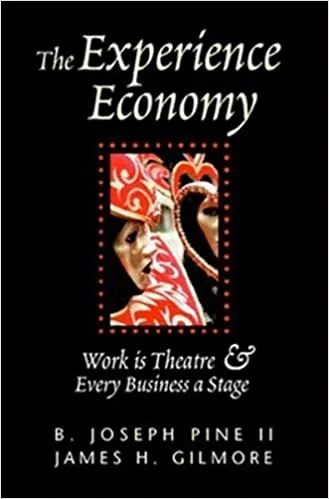
Reading tip: The Experience Economy
Joseph Pine is one of the most important names in experience marketing, with theories that can also be applied to what we now call live marketing. His concept of experience marketing first emerged in an article published in 1998 alongside James H. Gilmore. The duo of writers combined their knowledge and presented important concepts in the book “The Experience Economy.”
The authors reveal their ideas throughout the work and have encouraged entrepreneurs worldwide to rethink their marketing strategies, with a focus on audience engagement through memorable experiences. After all, to stand out in the market, it is necessary to think outside the box. And it is through strategic and innovative actions that it becomes possible to surprise the audience and win them over effectively and powerfully.
Read also: Chat GPT: understand what it is and how the tool works
Stay tuned for more content on marketing and uncover the main digital marketing strategies on our blog. Just click here! 😉