
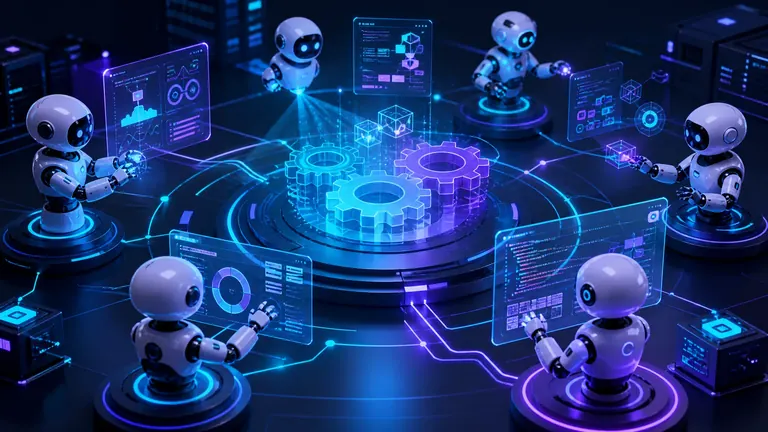
The Revolution of Autonomous Agents
According to Gartner, 40% of enterprise applications will have embedded AI agents by the end of 2026, up from less than 5% in 2025. These agents act as true digital colleagues, capable of perceiving their environment, reasoning about problems, and making decisions to achieve goals.
What Are AI Agents?
Unlike traditional chatbots, autonomous AI agents can plan, execute multiple tasks, and learn from outcomes. They do not just answer questions — they act, perform complex tasks, and adapt to new situations without human intervention.
Real Use Cases
In marketing, AI agents manage entire paid media campaigns. In customer service, they resolve complex issues autonomously. In sales, they qualify leads, schedule meetings, and even close deals. In logistics, they optimize routes and manage inventory in real-time.
How to Implement
Implementation begins with identifying repetitive and rule-based processes. Next, the scope of the agent, data sources, and limits of autonomy are defined. Tools like n8n, Make, and specialized agent platforms facilitate creation.
Challenges and Governance
With autonomy comes responsibility. It is crucial to establish governance, real-time monitoring, and clear operational limits. The AI TRiSM (Trust, Risk, Security Management) framework is essential to ensure security and compliance.
Kaizen Agency develops customized AI agents for businesses. Request a demonstration.