
SEO
AEO: Optimization for Answer Engines Beyond Google
GEO, AEO, LLMO — different names for the same competition: appearing in the answer, not in the list. See the method that works in practice.
· 2 min
Read
Rocket AI Expert
We want to teach you integrated marketing with AI — at a superior level. Expand your knowledge and reach far beyond the obvious.
Quick search in the archive
GEO, AEO, LLMO — different names for the same competition: appearing in the answer, not in the list. See the method that works in practice.

Publishing ten articles a week without architecture is producing stock, not authority. What sustains consistent ranking — and citation in AI responses — is how the pages interact with each other.

Asking out loud has become routine: in the car, in the kitchen, at work. And with AI assistants increasingly integrated into daily life, queries have shifted from typed keywords to conversation. Content producers need to understand the practical implications of this change. How voice queries differ: They are longer and more natural. "What is the best marketing agency for industry in Porto Alegre" instead of "marketing agency porto alegre." They often have local intent. Most voice questions involve "near me," "open now," or "where is." They require a single answer. The assistant does not show ten results — it chooses one. Being the chosen answer is worth more than being well-positioned. It relies on structured data. Hours, address, service, and reviews need to be machine-readable. Five adjustments that increase your chances of being the answer: 1. Write as you speak. Include the full question in the text, in a question-and-answer format. "How much does an institutional website project cost?" as H2, followed by a direct answer in two or three sentences. This serves both the assistant and the reader who arrived there by voice. 2. Mark frequent questions with schema. Use FAQPage markup for your client's actual questions, with short answers. It is one of the easiest formats for response engines to read and reuse. 3. Reinforce local signals. Complete contact page, updated hours of operation, address in text — not in image —, map, and clickable phone number. An outdated business profile undermines the chance of appearing in local voice queries. 4. Care for speed and clarity. Spoken answers arrive in seconds. If the page is slow, the assistant looks elsewhere. Objective, direct text, without a long introduction before the main point. 5. Work on reviews. Assistants tend to prioritize businesses with consistent reputations. Systematically asking for reviews — not occasionally — is one of the local marketing actions with the best return. Example of page structure: Element Objective H1 with service and city Clarity of entity and location Direct answer paragraph Citable excerpt in voice FAQ block Matching the spoken question Contact information in text Machine-readable Proof of social and reviews Trust and prioritization Common mistakes: Hiding contact information in images or scripts. Writing creative titles that do not describe the service. Ignoring regional variations in product or service names. Not updating hours and holidays. Conclusion: Voice search does not require exotic techniques; it requires clarity. Those who write directly, structure readable data, and maintain a consistent local presence appear in spoken answers. And, since voice offers a single answer, each adjustment here has a disproportionate effect on the volume of contacts received.

Ranking first no longer guarantees a click. In 2026, a large part of B2B purchasing decisions starts within an AI-generated response — AI Overviews, ChatGPT, Gemini, Copilot, and Perplexity. Those who appear in the response capture demand; those left out of the citation simply do not exist for that buyer. What has really changed in search? Search has shifted from a list of ten links to a synthesized response. The AI engine reads dozens of pages, merges the information, and delivers a paragraph. It cites the sources it can extract clearly. This creates a new metric: share of citation — the portion of responses in which your brand is mentioned as a reference. In practice, three consequences have fallen into the lap of any company: Zero clicks have increased, and top-of-funnel visits have decreased. Citation is worth more than average position: mention in the response generates qualified demand. Generic content — which any AI can already rewrite — has lost commercial value. The five pillars of SEO for AI 1. Direct answer blocks Language models extract self-contained excerpts. Each H2 of your article should start with a two to three-sentence answer that stands alone, without relying on the rest of the text. Then comes the long explanation. This pattern — short answer, deepening — is what appears most in citations. 2. Original and citable data AI cites what it cannot find elsewhere. Your service's own numbers, average closing time, average ticket per channel, internal benchmarks of your sector: this becomes ammunition. An original statistic with a described methodology is worth more than ten paragraphs of opinion. 3. Clear entity, not just keyword AI engines work with entities. Your company needs to be consistently connected to a set of themes, people, products, and locations. Real author signature, standardized company name across all channels, unique description, and well-filled organization schema. 4. Machine-readable technical structure Valid Article, FAQPage, Organization, and BreadcrumbList schema. Semantic HTML: one H1 per page, heading hierarchy without gaps. Content in HTML rendered on the server — AI usually does not execute JavaScript interactions. Lists, tables, and definitions in formats that the model can copy without rework. 5. Presence outside the site Models cite sources that appear in multiple places. Complete profiles, mentions in industry press, presence in relevant directories, and contributions to specialized communities increase the machine's trust in your brand. Traditional link building still matters, but now the goal is also to be read and cited, not just linked. How to measure if it’s working Set up a prompt monitoring dashboard: choose 20 to 50 real questions your customer would ask and run them periodically in ChatGPT, Gemini, AI Overviews, and Perplexity. Record in which of them your brand appears and in what context. Add to this the volume of sessions originating from AI referrers and assisted conversions. Also, track the citation rate per page: which articles are used as sources and which are never read by machines. The second group is where the cheapest and most profitable rework lies. Errors that cost citation Lean content, lacking depth, that AI summarizes without needing to cite. Commercial information locked in PDF, image, or form. Blog without identified authorship or update date. Slow pages with content loaded only on the client. What to do in the next two weeks Choose ten pages that already generate revenue, rewrite the opening of each section in the direct answer format, insert at least one original data point per article, and review the schemas. Then, set up prompt monitoring. SEO for AI does not replace classic SEO — it uses the same technical foundation and adds the layer of clarity that models need to cite you. Companies that treat citation as a business goal, not just marketing vanity, are capturing demand before competitors enter the funnel. This is the competitive advantage of 2026.

Learn how to grow in zero-click search with answer hubs, FAQs, schema, and content designed for AI Overviews and snippets.

Understand how Google AI Overviews and GEO change SEO, why citation matters more than clicks, and how to structure answers for AI.

LLMO (Large Language Model Optimization) is the set of practices to make your brand be cited, recommended, and remembered by language models like…

Your site is not only read by people: it is read by AIs that decide whether to recommend it. Learn the SEO practices for AI — from structured data to conversational content.

Google's AI Overviews appeared in 43% of searches in 2026. Understand what this means for your organic traffic and how to get your content cited in AI responses.

Generative search is changing the SEO game. Understand what GEO is, how to optimize content for ChatGPT, Gemini, and Google's SGE.
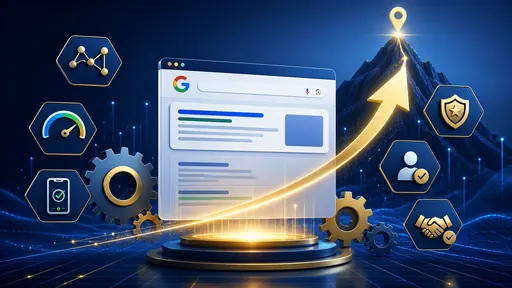
Google updated its algorithms in 2026. Discover the new SEO rules, Core Web Vitals 2.0, E-E-A-T, and how to rank at the top of search results.

With AI prioritizing trustworthy sources, E-E-A-T has become the most important factor in SEO. Learn how to build real digital authority for your business.

With the rise of generative search, over 25% of queries will be answered without clicks by 2026. Learn how to position your brand in this new landscape.

Traditional SEO is evolving into GEO (Generative Engine Optimization). Understand how to optimize your content to be cited by AIs like ChatGPT, Gemini, and Google SGE.
The Future of Search Has Arrived In 2026, a growing share of searches is not typed — it is spoken. Voice assistants like Google Assistant, Alexa, and Siri, combined with conversational AIs like ChatGPT and Gemini, are profoundly changing how people seek information. This requires a new approach to SEO. Voice searches
What is GEO and Why It Matters for SEO in 2026 Generative Engine Optimization (GEO) is the natural evolution of SEO in light of the rise of AI-generated responses. While traditional SEO optimizes websites to appear in Google search results, GEO focuses on ensuring that

When a patient searches for “dentist canal Moema,” “adult acne dermatologist Barra,” or “RPG physiotherapist near me,” Google displays a map with 3 clinics at the top and, just below, the 10 organic results. If your clinic is not among them, you are invisible to patients who are already ready to schedule. SEO for clinics

“We guarantee first page on Google in 30 days.” If you heard that, run. SEO is not magic, there are no guaranteed timelines, and there are no shortcuts — unless the shortcut is black-hat and the destination is a Google penalty. This guide shows how to hire an SEO agency that truly delivers results.

When a candidate searches for “civil engineering college in São Paulo,” Google shows 3 paid ads and then the organic results — which receive 70% of the clicks. If your institution is not among the top organic results, you are invisible to 7 out of 10 candidates actively searching for courses. SEO for colleges

Many companies invest in SEO expecting traffic. Traffic comes in, numbers rise, reports look good — and the sales team continues to complain that there are no good leads. This scenario repeats itself because, in many cases, SEO and content are treated as parallel projects focused on ranking, rather than as gears in an operation that needs to generate pipeline.

What is Google Penguin and how does it relate to me? The latest update of Google Penguin, one of Google's main algorithms, has just been released as announced by Google. With this update, Google confirms its latest specific update, and from now on it will be part of the core.

If you've been investing in SEO for at least two years, you've probably experienced this nightmare: articles that ranked on the first page simply disappeared. Organic traffic plummeted. And the worst part — you didn't do anything wrong. At least, that's how it seems. The uncomfortable truth is that Google changed the rules of the game. And

The best choice between SEO and paid traffic for clinics is not a matter of preference — it's a matter of timing and strategy. This doubt is common because both options promise results. But they work in completely different ways. And choosing without understanding this can be costly. SEO builds presence. Paid traffic accelerates.

In 2026, SEO for small businesses has become more crucial than ever. With increasing competition in the digital environment, standing out in search engines is essential to reach new customers and boost sales. In this article, we will explore the best SEO practices that small businesses can adopt to improve their online visibility. If you are like
Continuous evolution for maximum performance
Kaizen University is our open education platform, created to train high-performance strategists in sales, marketing, and process automation.
We offer free courses, complete learning paths, and exclusive content for professionals who want to master market best practices.