
Discover all the advantages of using email marketing and implement it right now!
Did you know that Email Marketing is one of the oldest and most effective strategies in digital marketing? Although it emerged long before social media and other online communication platforms, email marketing remains a powerful tool to reach your target audience, nurture relationships, and boost your business results.
But do you know how to efficiently explore the functionalities of Email Marketing to adopt it in your digital strategy? Keep reading to find out!
What is email marketing?
In the increasingly digital world we live in, Email Marketing is a strategy that stands out for its efficiency in promoting connection with the target audience. It also works for nurturing relationships, boosting your business results.
In practice, email marketing involves sending commercial messages to a list of qualified contacts. These messages can include company updates, special offers, relevant content, event invitations, and much more. Thus, we can say that the power of email marketing lies in its ability to deliver personalized messages directly to the recipient's inbox, reaching them in a direct and personalized way.
With appropriate strategies, intelligent segmentation, and engaging content, we are talking about a powerful tool to drive business growth by strengthening relationships with customers.
How to adopt email marketing in a digital strategy?
Build a contact list
The first step to using Email Marketing is to build a contact list – the so-called qualified leads. This can happen in different ways. For example: offer visitors to your website the option to subscribe to your email list, using forms in strategic locations. It is also important to encourage people to subscribe by offering benefits, such as an e-book, discount coupon, or access to exclusive content.
In the physical world, it is also possible to gather quality contacts to be part of a list for email marketing. This can occur, for example, from events, conferences, and lectures. You can request contact information from visitors, which contributes to building a strong mailing list for the company.
Target audience segmentation
Segmentation is essential for the success of Email Marketing, after all, when sending personalized messages, the goal is to reach an audience interested in the presented solution. A good tactic for this is to divide the contact list into segments based on relevant criteria, such as interests, purchase history, demographics, or browsing behavior.
With list segmentation, it is possible to invest in creating even more targeted and personalized email campaigns. In other words, it becomes easier to send relevant messages to each specific group. Automatically, this increases the likelihood of engagement and conversion.
Message personalization
Personalization is one of the keys to the success of Email Marketing. To do this, use the available data to personalize messages, including the recipient's name, specific offers based on previous purchases, or relevant products based on interests. Additionally, it is important to adapt the tone and language of the message according to the target audience's profile, creating a stronger and more relevant connection.
Creation of relevant content
The content of the email is crucial to capture the attention of recipients and encourage interaction. Therefore, make sure to offer relevant, useful, and valuable material for the target audience. One way to achieve this goal is to include information about new products, tips, and tutorials related to your market niche. Other interesting topics include company updates, case studies, customer testimonials, and much more.
Responsive and attractive design
The design of the email is important to convey professionalism and attract the attention of recipients. After all, a good strategy is of no use if the visual is not appealing. Ensure that the design is responsive, meaning it adapts to different devices and screen sizes. Use visual elements, such as images, colors, fonts, and attractive layouts, but avoid overloading the email with excessive information. The design should be clean, organized, and direct attention to the main messages and calls to action (CTAs).
Test the email and perform continuous optimization
Email Marketing allows you to conduct tests to optimize your campaigns. Therefore, try to perform A/B tests to compare different elements, such as subject line, content, layout, or calls to action, in addition to identifying what generates better results. Monitor performance metrics, such as open rate, click-through rate, and conversion rate, and use this data to adjust and improve your campaigns over time. Testing and continuous optimization are essential to maximize the impact of Email Marketing and achieve better results.
Campaign automation
Email campaign automation is a powerful strategy for sending personalized messages based on specific actions of the recipients. For example, you can set up automated emails for a new subscriber, sending relevant information over a certain period of time.
Additionally, automation can be used to send birthday emails, abandoned cart reminders, re-engagement of inactive customers, and much more. Automation saves time and allows you to maintain a consistent relationship with your contacts, enhancing the use of email marketing as an efficient and assertive strategy.
Analysis and tracking of results
The analysis of results is fundamental to measure the success of an Email Marketing campaign. For this, tools can be used to monitor metrics such as open rate, click-through rate, conversion rate, and unsubscribe rate.
In this same sense, it is possible to track the behavior of recipients, identifying patterns and trends to then use the insights obtained in adjustments and optimization of digital strategies. Continuous analysis is essential to understand what is working and improve the results of Email Marketing.
Keep an eye on good email marketing practices
Good Email Marketing practices are essential to ensure the success of a campaign and maintain effective communication with contacts. First, it is crucial to build a list of qualified contacts, obtaining consent from recipients to receive emails. This avoids spam issues and helps build an engaged and interested contact base in what you have to offer.
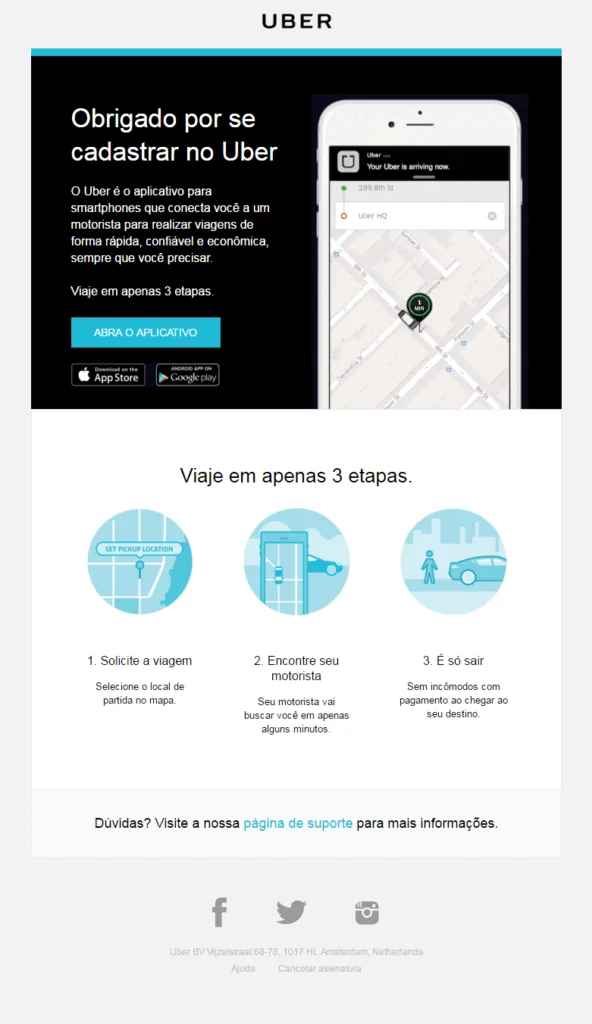
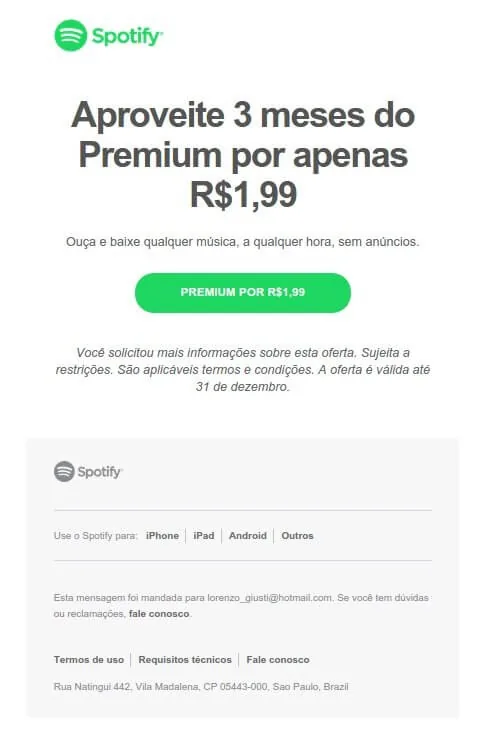
It is also important to value a balanced approach between promotional and informative content – see in the examples above from Uber and Spotify. Emails should offer value to recipients, with useful information, tips, resources, or relevant insights for the market niche. In other words, avoid filling emails with promotions and direct sales, as this can lead to loss of interest and unsubscribing.
Additionally, it is worth paying attention to the email design, which plays a fundamental role in good practices. It should prioritize a clean, organized, and visually appealing design. Resources that can be used include relevant images, harmonious colors, and a clear structure that guides the recipient through the message. Remember that many users access emails on mobile devices, so ensure that the design is responsive and adapts to different screen sizes.
Another important aspect is the frequency of sending. A basic tip, yet often forgotten, is: do not overwhelm your contacts with excessive emails. Find an appropriate balance, considering the relevance and ideal frequency for your audience. Consistency is also key. Establish a regular sending schedule so that recipients know when to expect your messages.
Finally, it is essential to include clear and easy-to-use unsubscribe options in all emails. Respect the decision of recipients who choose to leave the list by removing them immediately. This practice demonstrates respect for the user and avoids sender reputation issues.
Learn more about email marketing automation and enhance your digital strategy
As seen above, automation is a strategy that allows you to personalize and automate campaigns based on specific actions of the recipients. With this approach, it is possible to create complex and highly segmented workflows, adapting messages according to the behavior and preferences of the recipient.
One of the main advantages is the ability to provide personalized and relevant content at scale. Based on the interactions of recipients with your emails, it becomes easier to set up a series of automated messages to meet needs and objectives. For example, you can send a personalized welcome email to new subscribers, followed by a sequence of educational emails that nurture the relationship over time.
Additionally, automation can be used to re-engage inactive contacts, with special promotions or exclusive content to encourage them to resume engagement with the brand. Similarly, it is possible to send birthday emails, abandoned cart reminders, post-purchase follow-ups, and much more, all in an automated and personalized manner.
Learn more about Active Campaign and how to use this tool to automate emails in this complete article.
How does the automation tool facilitate email sending?
To implement this strategy, it is necessary to use marketing automation tools that allow the creation of complex workflows. These tools enable you to set triggers and conditions to trigger emails, as well as offer advanced segmentation features to direct messages to the right audience.
Automation provides a more personalized and relevant experience for recipients, increasing engagement and conversion rates. Additionally, it saves time and resources, as campaigns are executed automatically, allowing the team to focus its efforts on other strategic areas of the business.
However, it is important to remember that this tool requires careful planning and a well-defined strategy. It is necessary to understand the behavior of the target audience and create workflows that are relevant and effective. After the workflow is implemented, results should be monitored and adjustments made based on metrics and recipient feedback.
Count on a specialized agency in digital strategies to develop your email marketing campaign
If you want to maximize the potential of Email Marketing as a powerful communication tool with your customers, you have come to the right place! With experienced professionals and up-to-date knowledge, a digital marketing agency can help you create personalized, segmented, and effective campaigns.
At Kaizen, we work from building qualified lists and creating relevant content to advanced automation and results analysis. Only an agency focused on results can provide complete support in all stages of the process.
Contact us right now and find out how we can help!