
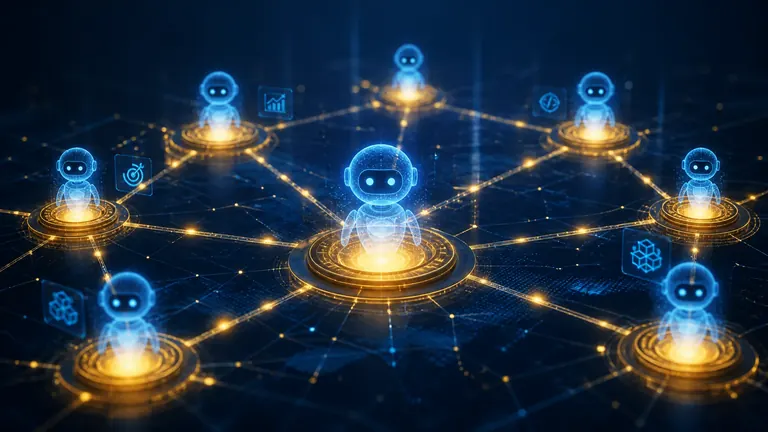
In May 2026, Google Marketing Live brought one of the biggest transformations in the history of digital advertising: the integration of artificial intelligence agents directly into ads. What was once speculation became reality — and marketing will never be the same.
What Was Announced?
Google introduced three main innovations that reposition AI as an operational layer of ads, rather than just a supporting tool:
1. Business Agent for Leads
Instead of static forms asking for name, email, and phone number, the Business Agent for Leads embeds an AI chat directly within the ad. This agent is powered by the advertiser's website and can answer specific user questions in real-time — about prices, deadlines, features — and only delivers the pre-filled form when the lead is ready. Initial tests are running in the education, automotive, and real estate sectors.
2. AI Shopping Ads
Shopping ads are now generated by AI: the system selects the most relevant products and writes a personalized explanation for each user. The result is dynamic ads that adapt to each person's search context.
3. Ask Advisor
A unified agent that spans Google Ads, Google Analytics, Merchant Center, and Google Marketing Platform. Instead of marketers navigating through dozens of tabs and reports, they can ask the Ask Advisor: “How is the performance of campaign X?” and receive a consolidated response with action recommendations.
What Does This Mean for Marketers?
The first practical consequence is that the ad copy is no longer the complete message. With AI agents conversing with leads within the ad, the structured content of your website also becomes part of the ad. If the agent accesses your site pages in real-time, having a well-structured website with clear information and organized data has become a requirement for performance.
The second is the consolidation of tools. Google is clearly moving marketing operations to a model where the professional “pilots” the system instead of manually setting up each campaign. For lean teams, this is a huge productivity gain. For professionals used to micromanaging every cent of the budget, the adaptation may be uncomfortable — but necessary.
Expected Data and Results
According to initial analyses, advertisers who adopted AI agents in lead generation campaigns reported a 34% increase in lead qualification rates and a 22% reduction in cost per qualified lead. The trend is that these numbers will improve as agents learn from user behavior.
Conclusion
Google Marketing Live 2026 marked the end of the era of isolated tools and the beginning of the era of AI-connected systems. Agencies and professionals who understand this first — and structure their data and content to feed these agents — will get ahead.
At Agência Kaizen, we are already applying these strategies for our clients. Want to know how to prepare your campaigns for this new reality? Talk to us.