
Learn All About Microsoft's Search Platform
We all know that Microsoft is one of the largest technology companies in the world. But is its search platform Bing a match for Google? This is one of the corporation's main tools and, although it is less known than Google, it is a robust platform capable of competing with the search giant.
In this article, you will learn more about Bing and what makes it a viable option for users and marketing professionals.
What is Bing?
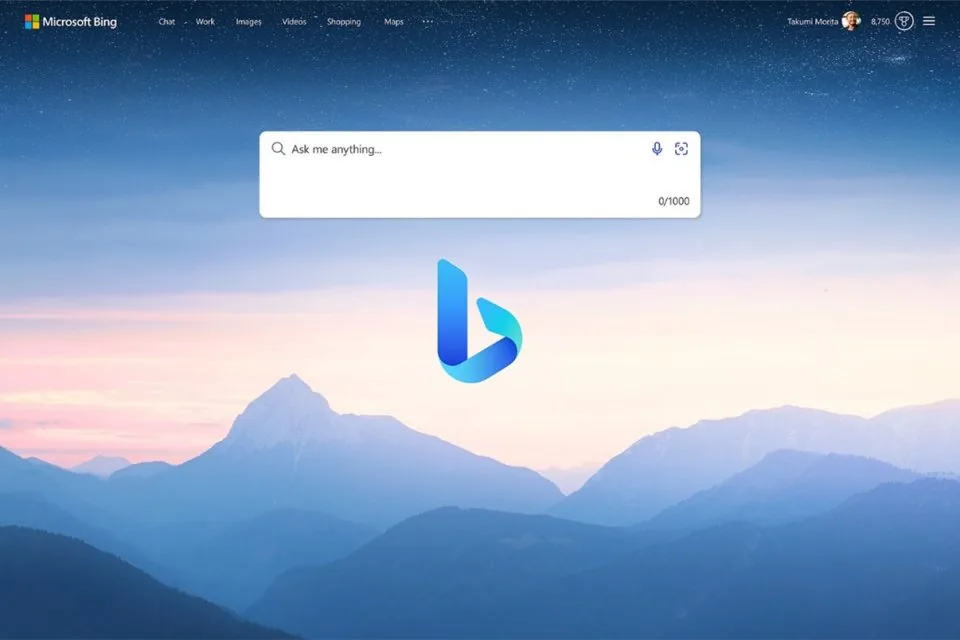
As we know, it is Microsoft's search platform. Bing was launched in 2009 as the successor to the old Live Search and MSN Search. Since then, it has become a popular alternative to Google, with a global market share of about 3%. While this may seem small compared to Google's over 90%, Bing is currently used by millions of people every day.
Proof of this is the tool's latest achievement: in the first week of March, Bing hit the mark of 100 million active users per day. Much of this is due to the popularization of Chat GPT, which has been integrated into Microsoft's search engine. With this new version, users can use the chatbot to optimize search results. Curious? Just visit the site and try it out now!
But beware! Using the new features in-depth won't be that simple. To actually use it, you will need to sign up for a waiting list, which already has over a million people in line. So, are you up for it? 😛
Throughout this article, you will understand a bit more about the tool's evolution since its launch, discover the main differentiators of the new Bing, and how it has been gaining more strength in the fierce battle with Google.
Why Use Bing?
In a universe completely dominated by Google, you might be wondering, "Why would people use Bing?" The truth is that there are several reasons for this, no matter how much you might doubt it. To prove it, let's explain them below:
1. Integration with Windows
Bing is the default search platform for Windows, which means that many users are already familiar with it and use it for convenience. It is also integrated with other Microsoft products, such as Office and Edge, which can make life easier for those using these programs.
2. Personalized Search Results
Microsoft's tool uses user data to personalize search results. This means that if you search for "Japanese restaurants in Porto Alegre," Bing may take into account your location, search history, and other factors to provide results that are more relevant to your lifestyle and behavior.
3. Images and Videos
The image and video section of the tool is considered useful by many users. It allows you to search for specific images and videos and even upload an image to search for similar images.
4. Bing Rewards
Bing Rewards work like a loyalty program for users in some countries to earn points for searches and other activities performed on the platform. These points can be exchanged for Microsoft products and services or gift cards and have a predetermined duration for use.
How Did It All Start?
Bing was launched by Microsoft in June 2009 with the aim of competing with Google, which at the time was already the undisputed leader in the internet search market. Prior to it, Microsoft had a search engine called Live Search – which was unsuccessful. It was then decided to invest in a new product to offer a more personalized and intuitive search experience.
The name Bing was chosen because it is short, easy to remember, and has a pleasant sound. Additionally, it can be used as a verb, like "bing it" (search for it). Upon its launch, it surprised with its intuitive and attractive interface. It also provided features like "Suggestions," "Explore Pane," and "Instant Results." Other innovative features for the time included visual and shopping search.
In particular, its creators say that Bing was designed to provide more relevant and accurate results than those of other engines. It is worth noting that Microsoft invested a lot of money in advertising to promote it and attract users. Since then, a lot has changed, and they continue to improve their technology and features. However, despite these ongoing advancements, Bing is still far behind Google in terms of popularity.
As mentioned earlier, Google is the most used search engine in the world, with over 90% market share. Meanwhile, Bing has a share of less than 3%. Undeterred, Microsoft continues to invest in the tool, making it standard in various products like Windows and the Edge browser. Additionally, the company offers search advertising services through Microsoft Ads, allowing advertisers to reach users, just like with Google Ads.
And the New Bing? How Does It Work?
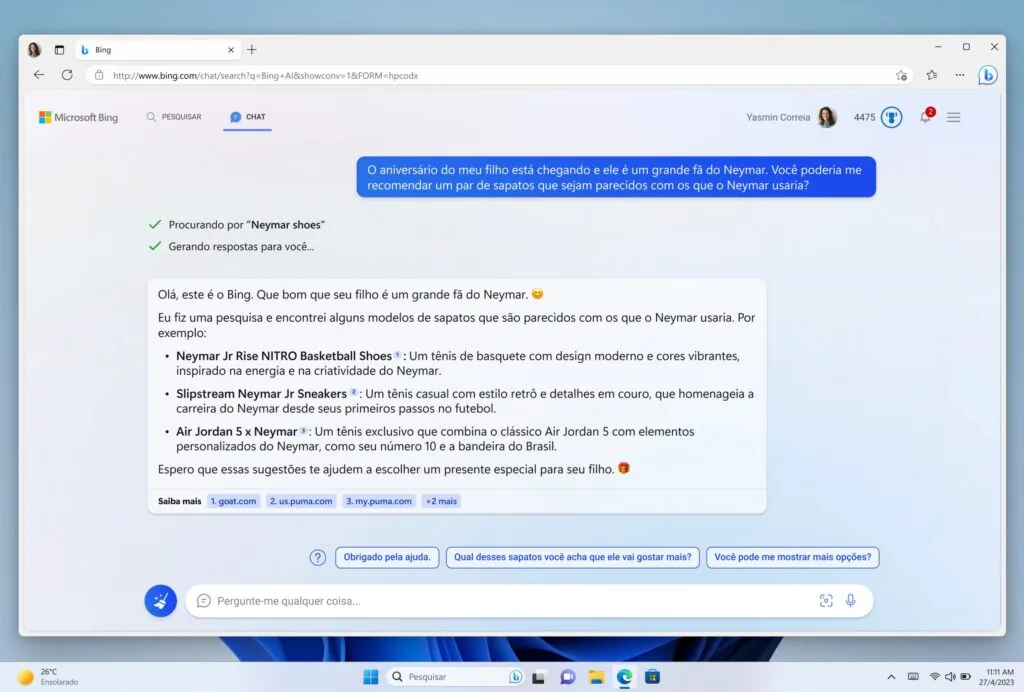
Being attentive to all market transformations, Microsoft recently launched a new version of Bing. Fully enhanced, Microsoft's search tool is integrated with an intelligent chatbot, similar to OpenAI's Chat GPT. With the artificial intelligence feature, searches now offer increasingly complex and contextualized results.
"Artificial intelligence will fundamentally change all categories of software, starting with the biggest of all – search," explained Satya Nadella, Chairman and CEO of Microsoft, in the announcement of the new technology. "Today, we are launching Bing and Edge powered by an AI-based copilot and chat, to help people get even more from searches and the web," he added.
As Microsoft explains, the technology is called Microsoft Prometheus Model and is similar to that used by Chat GPT, but with an artificial intelligence fully customized to meet the needs of a search tool. With this, the American company considers it even more powerful than Chat GPT.
"We developed a proprietary way to work with the OpenAI model that allows us to maximize its power. We call this collection of capabilities and techniques the Prometheus model. This combination provides more relevant, up-to-date, and targeted results, with greater safety," adds Satya.
In practice, it works like this: upon receiving the user's question, Bing's artificial intelligence analyzes the content and then searches for relevant results. In addition to providing these results, Bing summarizes everything it found into a single answer. The goal is to make the tool easier to use and provide a clear and objective answer for the internet user, avoiding information overload.
We Tested the New Bing!
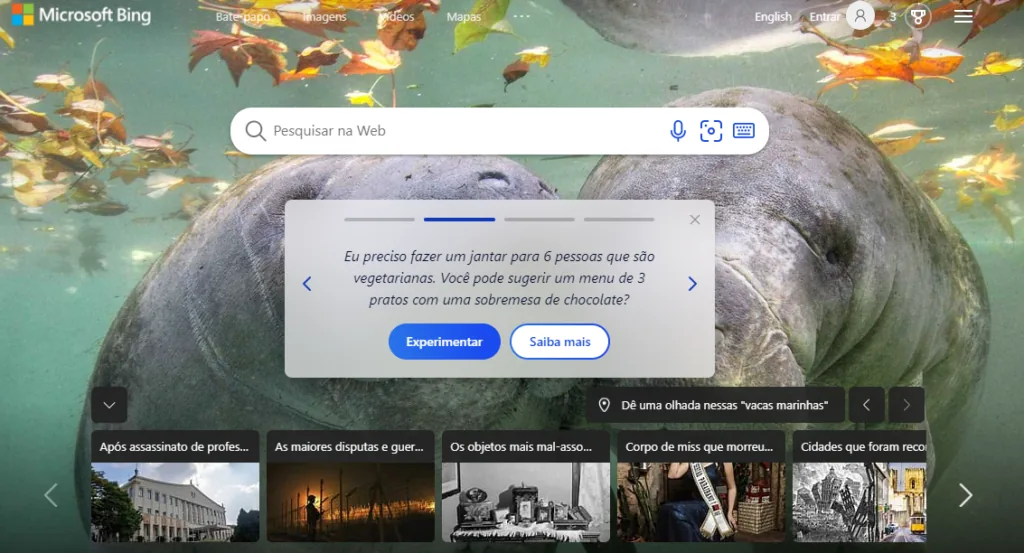
When opening Bing's search page, we are invited to try its new features. Right away, it tells us what it's here for: Ask real questions. Get complete answers. Very well, so how about testing this update? The platform itself suggests a question, and we will follow with it: I need to make dinner for 6 people who are vegetarian. Can you suggest a 3-course menu with a chocolate dessert? See in the image below:
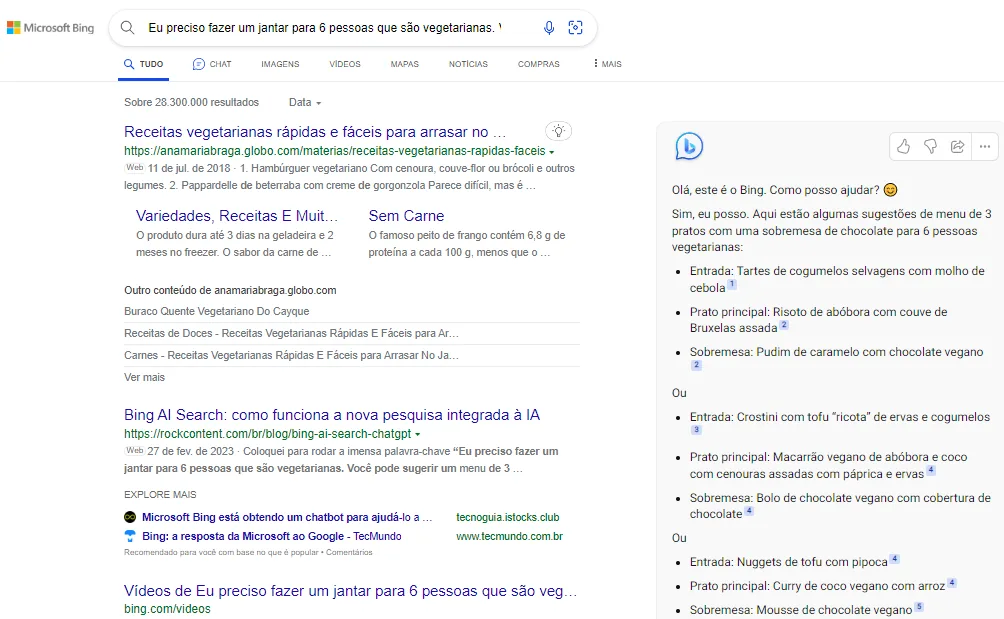
When searching for a menu for a vegetarian dinner, we are presented with Bing's new feature. Below, as usual, are the search results, with an organic list of sites that likely meet the user's needs. However, the difference is on the side of the screen, where the chatbot presents a humanized suggestion in response to the question.
This response is developed by artificial intelligence based on all the sites that appeared in the search results. It captures the most relevant information and transforms it into a single answer. The goal, as Microsoft itself revealed, is to facilitate the internet user's routine and improve the user experience while browsing Bing.
So, have you used Bing or are you curious to test the new tool?
It seems that the search engine will increasingly adapt to the new needs of internet users, being an interesting and efficient alternative for web searches.
To stay updated on more interesting content about the digital universe, just keep following the Kaizen blog! And don't forget to follow our profile on Instagram! 😉